Big Pause: A Free Reset Button for Everyday Life
Last year I went cuckoo bananas. That’s my term anyway. Although it’s problematic, it describes how I felt. What really happened to me is that I had a rough patch with anxiety. Most days, I would lie on the floor and stare at the ceiling with my heart racing. I struggled to work, but I could not stop thinking about work either. Simple things like reading, seeing friends or going for a walk felt impossible.
After months of feeling like this, I visited my GP and learned how common anciety is. About 17% of Australians experience an anxiety disorder each year. Nearly half will face a mental health challenge at some point. Knowing this didn’t fix anything for me, but it made me feel a little less alone and uniquely unwell.
Self care as a chore
When I realised something was wrong, I downloaded some mindfulness apps. They’re reassuring and flashy and they worked in theory, but in practice they probably caused me more stress.
Notifications would interrupt meetings, or ping when I was wrangling my kids. Broken streaks would make me feel guilty. Every app wanted attention, or money, or a five star rating, or all three.
I’m doing much better now. Even better than before going cuckoo bananas. I told someone recently that I am self-actualised out the wazoo. If you know anything about Maslow’s hierarchy of needs, you’ll appreciate that’s a good thing. It took a combination of things: medication, exercise, talking to people I trust, therapy. There’s a line in an old episode of the British sitcom Peep Show where an angry handyman (Big Mad Andy) tells Jeremy: “There’s two types of people in this world, pal: people who know they got shit to sort out; and people who don’t know they got shit to sort out.” He’s a terrible character but he’s right about that.
One of the simplest tools that helped was also the hardest to remember when I actually needed it: breathing exercises and grounding techniques. When it worked, it was amazing, a huge unlock for emotional self-regulation. But I could never remember the steps. How long do I hold this breath? How many sounds am I supposed to notice?
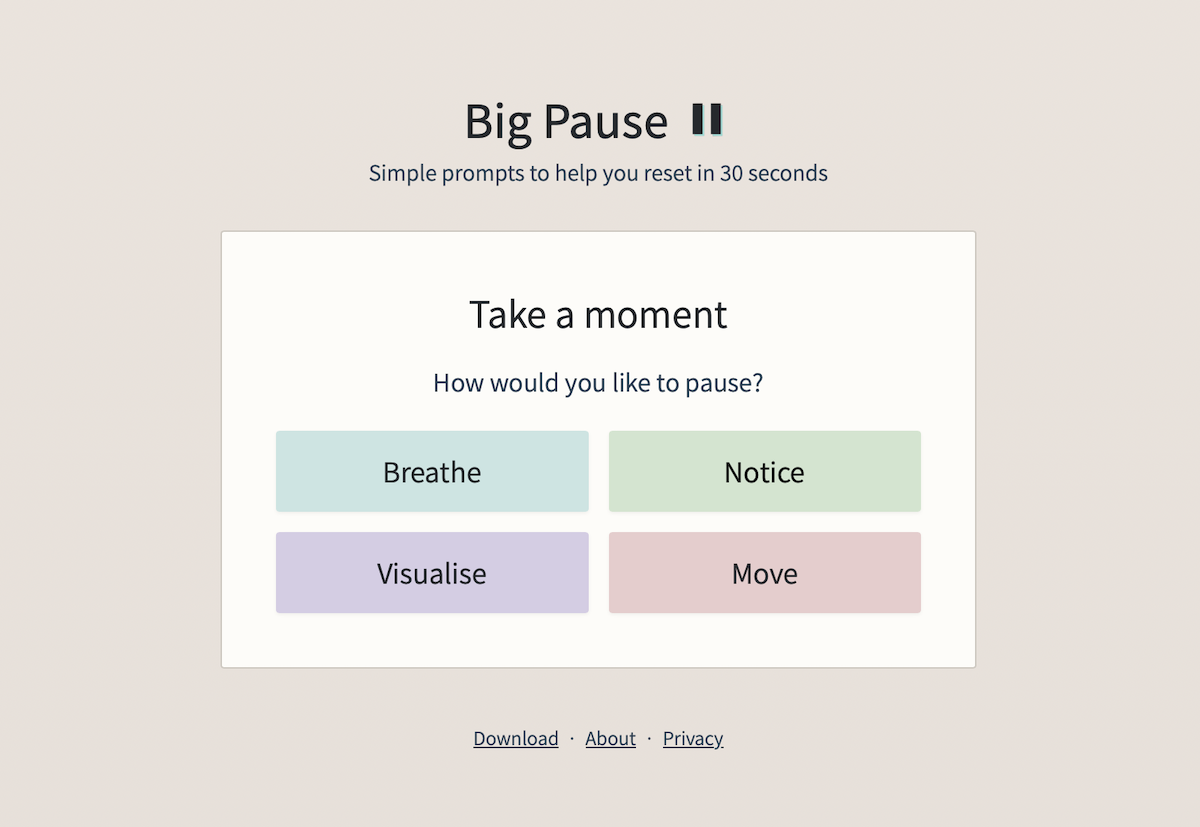
Over some recent evenings and weekends, I built Big Pause.
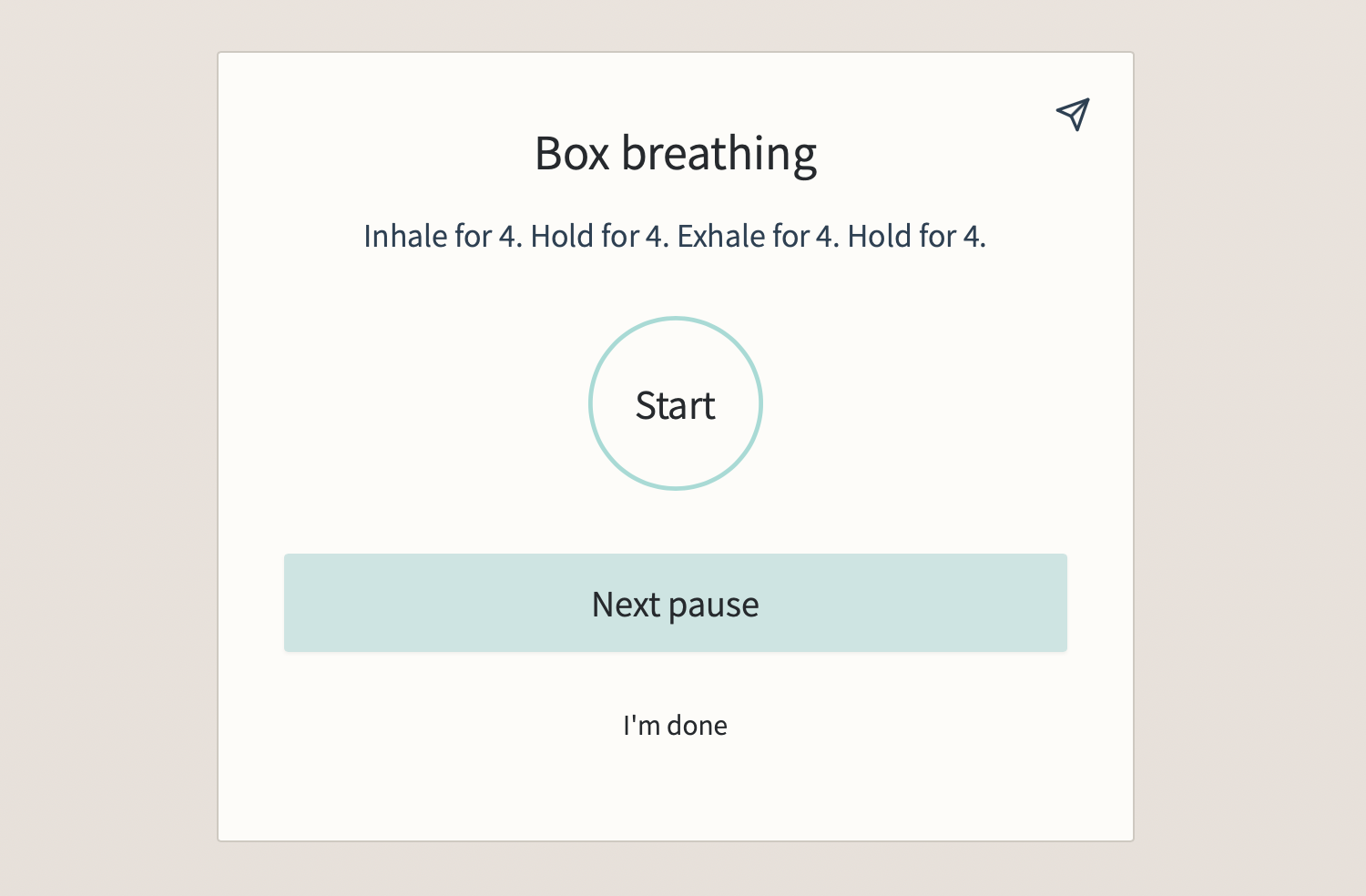
You tap a button. You get one short prompt. That’s it. There are no streaks. It offers a quick reset when you need it.
Who it’s for
Most wellbeing tools assume you will:
- set aside time
- commit to a routine
- listen and follow along
- return tomorrow
That works for some people, some of the time.
Big Pause is for all the other moments:
- between meetings when you feel tense
- before replying to a stressful message
- after the kids go to bed
- when you catch yourself mindlessly scrolling
- waiting in the supermarket queue
What makes it different
Quiet by default
Prompts are just text, no audio required.
For times when you want something more immersive, there’s an optional extra: tap the pause icon for gentle rain sounds and a calming animation.
Small on purpose
Each prompt is short and clear. Just simple direction: ‘Place your hand on your chest. Feel it rise and fall three times.’
There are 80 prompts covering breathing, grounding, mindfulness, visualisation and gentle movement. You can favourite the ones that work for you. It works offline (handy on planes or the tube) and there’s no tracking, cookies, or accounts.
Why it’s free
Big Pause is something I built for myself during a difficult patch. It helped me, so I’ve published it in case it’s useful to anyone else.
It’s free, no ads and doesn’t track or collect any of your data.
If you want to try it: https://bigpause.app